Local help for Eugene + Springfield
541-221-2288 Email Brandon

A practical guide for Oregon families

Oregon Wildfire & Smoke Preparedness Guide

Protect your family, prepare your home, breathe safer during smoke events, and know what to do before, during, and after a wildfire.

Sources reviewed August 9, 2026Oregon-first · Lane County local · No sign-up required

If you only do five things

Start here before fire season.

Small, finished steps are more useful than a perfect plan that never leaves the notebook.

  1. 01

    Get official alerts

    Register for Lane Alerts or find your county system through OR-Alert.

    Find local alerts
  2. 02

    Plan two ways out

    Choose routes, meeting places, an out-of-area contact, and who will help anyone needing extra time.

  3. 03

    Pack go-bags

    Keep medications, documents, chargers, maps, animal supplies, and essential comfort items ready to carry.

  4. 04

    Work from the house out

    Clear the first five feet, then maintain vegetation and access across the rest of the property.

  5. 05

    Prepare for smoke and recovery

    Set up a cleaner-air room, review coverage, and make a home inventory before conditions deteriorate.

Oregon's three evacuation levels

Be Ready. Be Set. Go Now.

Color helps people scan, but the level number and action words carry the meaning. Always follow the instructions in the actual alert.

Level 1Be Ready

A danger exists nearby. Stay informed and get ready to leave.

  • Sign up for and monitor county alerts, official local updates, and local news.
  • Finish packing, check routes and transportation, and contact your support network.
  • Consider leaving now if anyone needs extra time, including children, older adults, people with disabilities, people using medical equipment, and people with limited transportation.
  • Consider moving pets and livestock early.
Level 2Be Set

There is significant danger. Be ready to leave at a moment's notice.

  • Keep go-bags, people, animals, and vehicles ready to move immediately.
  • Leave now if anyone needs extra time or if you feel unsafe; you do not need to wait for Level 3.
  • Continue monitoring official information because conditions can change quickly.
  • Do not delay for belongings if leaving becomes urgent.
Level 3Go Now

There is extreme danger. Leave immediately.

  • Do not stop to gather belongings or try to protect the home.
  • Use official routes and keep roads clear for emergency responders.
  • Emergency responders may not be able to help people who remain.
  • Do not return until public officials announce that the area is safe.

Plan for people and animals

Make leaving simpler on a hard day.

Build the plan around the real needs of your household: school schedules, mobility, medication, transportation, animals, and the possibility that cell service will fail.

01

Family evacuation plan

  • Choose primary and alternate routes from home, work, school, and daycare.
  • Set one nearby meeting place and one outside the hazard area.
  • Name an out-of-area contact and give every person a printed contact card.
  • Keep paper maps, copies of prescriptions, important documents, and a little cash.
  • Plan for medications, mobility equipment, medical devices, charging, and accessible shelter.
  • Decide who picks up children, checks on neighbors, and contacts separated family members.
  • Keep vehicles fueled or charged and identify a backup driver or ride.
02

Evacuation go-bag

  • Water, portable food, necessary medication, first aid, clothing, and hygiene supplies.
  • Chargers, power banks, flashlights, batteries, and a radio.
  • Identification, insurance and financial copies, keys, glasses, and cash.
  • Paper maps and printed contacts.
  • Diapers, formula, and calm comfort items for children.
  • Correctly selected respirators and animal supplies.

A go-bag is for leaving quickly. Keep a separate, larger supply for longer emergencies at home.

03

Pets and livestock

  • Keep carriers, leashes, identification, records, medication, food, water, and bedding ready.
  • Practice loading pets and livestock before an emergency.
  • Arrange trailers, drivers, and alternate transport for large animals.
  • Identify more than one shelter, boarding facility, or safe destination.
  • Relocate early when officials recommend it; large-animal evacuation takes time.
Oregon animal preparedness

Wildfire smoke

Prepare for cleaner indoor air before the sky changes.

PM2.5 is fine particle pollution small enough to travel deep into the lungs. AQI translates monitored pollution into health-concern categories. Smoke can move and intensify quickly, so check current local conditions instead of relying on how the sky looks.

Check LRAPA's current AQI

Build a cleaner-air room

Choose a room that closes off well. When outdoor air is smoky, close windows and doors and run a correctly sized portable HEPA air cleaner or filtration setup supported by current OHA guidance.

Use filtration safely

Check the HVAC manual or ask a qualified professional which filter the system can handle. Follow official instructions for any DIY box-fan filter. Never block exits or create a trip, overheating, or electrical hazard.

Reduce added particles

Avoid smoking, candles, unnecessary frying, and other indoor particle sources. In a vehicle, set ventilation to recirculate while moving through smoke.

Use the right respirator

A properly fitted NIOSH-approved N95 or P100 may help when current health guidance recommends it. Cloth, dust, and surgical masks do not effectively filter wildfire smoke particles. Respirators do not fit or work for everyone, especially children.

Children and smoke

Children can be more affected because their airways are developing and they breathe more air relative to body weight. Plan indoor activities, check school or daycare guidance, improve filtration, keep medication plans current, and know where to go for cleaner air.

Health and medication planning

Older adults, pregnant people, people with heart or lung conditions, infants and children, outdoor workers, and others may be more affected. Keep necessary medication available, follow written care plans, and contact a health professional if symptoms worsen.

Defensible space & home hardening

Start where embers meet the home.

Embers can collect in small gaps and ignite roofs, decks, mulch, leaves, fencing, or stored materials. Work outward in Oregon's current zones and include every structure on the property.

The structureHome
  • Clear roofs and gutters; repair loose roofing and siding.
  • Address openings where embers can enter, including vents, eaves, gaps, windows, and doors.
  • Consider ignition-resistant roofing, siding, decks, fencing, and ember-resistant vents when repairing or replacing components.
Immediate Zone0–5 ft
  • Use gravel, rock, or pavers next to structures where practical.
  • Remove bark mulch, flammable plants, leaves, needles, and stored combustibles.
  • Keep decks, patios, and under-deck areas clear.
  • Use noncombustible fence sections or gates where fencing meets the home.
Intermediate Zone5–30 ft
  • Keep grass short and vegetation healthy and maintained.
  • Space plants and tree crowns; remove dead vegetation and ladder fuels.
  • Move firewood, lumber, and other combustibles away from buildings.
  • Maintain clearance around propane tanks using current OSFM guidance.
Extended Zone30–100+ ft
  • Thin or space vegetation for the site and slope.
  • Remove heavy ground litter, deadwood, and fuel paths to outbuildings.
  • Maintain driveway clearance, operable gates, and reflective address signs.
  • Include sheds, barns, fences, and shared access routes.

Recommended risk reduction

Useful work for an existing home

Home hardening and defensible space can reduce the chance that embers or nearby fire ignite a structure. Choose projects based on the property, local professional guidance, and safe work practices.

OSFM guidance and free assessment

Code requirements

Local adoption matters

Oregon finalized a model defensible-space code in 2026 for voluntary local adoption. It is not automatically mandatory statewide. BCD says ORSC Section R327 applies to specified new construction where a local building department has adopted it. Ask the local building department what applies before work.

Oregon building-code guidance

Landscaping and property work

  • Remove dead vegetation and maintain spacing, pruning, and ladder-fuel reduction.
  • Use fire-resistant landscape concepts and healthy, appropriately irrigated plants.
  • Operate mowers, grinders, chainsaws, and other spark-producing equipment only when safe and allowed.
  • Check ODF and local restrictions before outdoor burning or equipment use.
ODF fire prevention and restrictions

Community mitigation

  • Learn whether a Community Wildfire Protection Plan covers your area.
  • Explore Firewise USA and neighborhood fuel-reduction work.
  • Identify shared roads, gates, turnarounds, water access, and evacuation bottlenecks.
  • Plan how neighbors will share information and help people who need support.
  • Connect with local fire districts and community preparedness events.

Wildfire and Oregon home insurance

Know the map rule—and the larger underwriting picture.

Insurance is important preparation, but it is only one section of this safety guide. Policy language and the insurer's actual decision always control.

Important Oregon distinction

The former state hazard map cannot be used for specified homeowners actions.

Oregon repealed the statewide wildfire hazard map in 2025. Senate Bill 82 prohibits an insurance company from using any state-published wildfire hazard map to increase a homeowners premium, cancel a policy, or refuse renewal. That does not mean wildfire risk cannot affect insurance: DFR says insurers may use lawful property factors and their own proprietary models.

Verify with Oregon DFR

Why price and availability can differ

DFR identifies factors such as location, surrounding vegetation, availability and accessibility of fire protection, home age and replacement cost, construction and materials, maintenance, claim history, catastrophe losses, and rebuilding labor and material costs. Each company has its own filed underwriting appetite.

Mitigation can reduce physical risk, but it does not guarantee eligibility, renewal, a lower rate, or a discount. Ask the insurer how documented work affects its own underwriting.

Review before fire season

  • Dwelling limit and current estimated rebuilding cost.
  • Detached structures and personal-property limits.
  • Additional living expense or loss-of-use terms.
  • Deductibles, exclusions, and special limits.
  • Renters coverage for belongings and temporary living costs.
  • Whether comprehensive auto coverage applies to fire, smoke, or ash.
  • Home inventory, photos, receipts, and securely stored documents.

Actual coverage depends on the policy, endorsements, limits, deductibles, cause of loss, and insurer.

Not sure what your policy actually covers? Brandon can help you review the protection you have and identify questions worth asking before wildfire season.

Review your protection

Oregon recovery help

If You’ve Been Affected by a Wildfire

Start with the need in front of you—safe shelter, food, a claim question, cleanup guidance, emotional support, or a path toward stable housing. These links lead to organizations that can explain what is available for your location and wildfire.

Immediate help

Need shelter, food, or basic help now

Call 911 for immediate danger or a life-threatening emergency. For non-emergency wildfire needs, Oregon Department of Human Services can help survivors navigate food, shelter, replacement SNAP benefits, 211 referrals, and other support.

  • Call ODHS at 833-669-0554. Oregon lists the line as open 24 hours a day, every day, with interpreters available.
  • Call 211 or use 211info to look for current food, shelter, transportation, and local community services.
  • Check the Red Cross Cascades Region for current shelters and disaster help; services depend on the incident and household need.
Temporary stability

Displaced from home

If you cannot safely return, tell the shelter or navigator about medications, mobility or communication needs, children, service animals, pets, and transportation. Keep lodging, meal, clothing, transportation, and essential-purchase receipts.

  • Use ODHS, 211info, or the Red Cross to locate current short-term help.
  • If insured, ask the insurer whether additional living expense or loss-of-use coverage applies before making long-term commitments.
  • OHCS does not provide most services directly; its housing page routes people to local community action agencies and statewide resources.
Consumer help

Insurance or claim problems

Contact the insurer promptly, document damage only from a safe location, save receipts, and ask about inspections, temporary repairs, additional living expenses, deadlines, deductibles, and what must be approved before cleanup or disposal.

  • Keep a dated claim log and copies of estimates, letters, photos, inventories, and receipts.
  • Ask the insurer to explain coverage decisions and requested documents in writing.
  • If you cannot resolve a question or complaint, Oregon DFR consumer advocates provide free insurance assistance at 888-877-4894.
Return and debris

Cleanup, ash, debris, and damaged property

Wait for official re-entry clearance. Structural ash and debris can contain asbestos, lead, mercury, chemicals, sharp objects, and hidden fire or structural hazards. Do not begin major cleanup based only on general internet advice.

  • Check current state and local instructions because debris programs, contractors, right-of-entry rules, and disposal requirements vary by incident.
  • Do not dry sweep, use a leaf blower, or disturb structural ash before following DEQ and local guidance.
  • Document conditions safely and coordinate with the insurer before major cleanup, demolition, disposal, or repairs.
Rural property

Land, trees, and forest recovery

Burned land can have unstable trees, damaged roads, erosion, runoff, reforestation, grazing, and salvage questions. Oregon Department of Forestry maintains post-fire resources and can connect landowners with a local stewardship forester.

  • Avoid damaged trees and slopes until hazards have been evaluated.
  • Ask about site-specific erosion, invasive-plant, replanting, forest-practice, and timber-salvage considerations.
  • Check current ODF, USDA, county, and conservation-district programs; availability and eligibility change.
People and wellbeing

Emotional support and family recovery

Stress, grief, disrupted sleep, difficulty concentrating, and strong reactions can continue after immediate danger passes. Keep routines where possible, limit repeated exposure to distressing coverage, and give children simple, honest information and predictable check-ins.

  • Oregon lists Lines for Life at 800-923-HELP (4357) for emotional support and resource navigation, 24 hours a day, with interpreters available.
  • The Red Cross offers disaster mental-health support and recovery guidance.
  • Call or text 988 for immediate crisis support; call 911 for an imminent life-threatening emergency.
Housing and rebuilding

Long-term housing and rebuilding

Begin with OHCS housing navigation, a local community action agency, ODHS, or 211info. Ask which programs are open for this wildfire and whether applying affects other insurance or disaster benefits.

  • OHCS disaster-recovery and ReOregon pages include programs created for the 2020 Labor Day disasters. Do not assume those event-specific programs cover a newer wildfire; check the stated incident, counties, dates, enrollment status, and eligibility.
  • Before rebuilding, confirm local permits, current codes, utilities, septic or well requirements, financing, insurance scope, and licensed-contractor requirements.
  • Use FEMA household assistance only when a qualifying federally declared disaster has Individual Assistance open for your designated area. A fire-management or Public Assistance declaration alone does not make household aid available.

During evacuation & after the fire

Safety first. Document carefully. Clean up with guidance.

During evacuation

Leave on official routes.

  • Follow evacuation orders and leave earlier if anyone needs extra time.
  • Take go-bags and essential medical, mobility, and animal supplies.
  • Use official routes and check TripCheck or local alerts.
  • Keep roads clear for emergency traffic.
  • Do not stay to defend property and do not return before official clearance.
Returning home

Assume hazards may remain.

  • Wait for clearance and watch for structural damage, hot spots, utilities, damaged trees, sharp debris, and unstable surfaces.
  • Follow official drinking-water, septic, food-safety, and utility instructions.
  • Keep children and animals away from ash and debris.
  • Document damage from a safe location before moving or cleaning items.
  • Contact the insurer and ask what it needs to inspect before major cleanup or repairs.
Ash and debris

Treat structural ash as hazardous.

  • Burned structures can leave ash containing asbestos, lead, mercury, and other hazardous substances.
  • Do not use a leaf blower or dry sweep ash; do not vacuum without HEPA filtration.
  • Follow DEQ and local rules for protective equipment, wet methods, asbestos, transport, and disposal.
  • Qualified cleanup or abatement help may be necessary.

A home that did not burn

Smoke infiltration does not always require the same response.

Air out only when outdoor air is safe. Check and replace HVAC filters as appropriate, inspect filtration equipment, damp-clean hard surfaces, launder fabrics according to care instructions, and evaluate porous materials. Document damage and contact the insurer before major remediation when coverage may be involved. Extensive contamination may need a qualified restoration professional; a light odor alone does not automatically mean expensive remediation is necessary.

Insurance claim basics

  1. Confirm the property is safe.
  2. Notify the insurer.
  3. Document before discarding items when safe.
  4. Save receipts and track additional living expenses.
  5. Keep claim communications and ask questions before signing repair contracts.
  6. Contact Oregon DFR consumer advocates if a problem cannot be resolved.
Oregon DFR consumer help

Download & print

A family resource library—no form required.

Each original checklist opens as a clean, black-and-white-friendly page. Use your browser's Print / Save as PDF option to keep a digital copy.

01

Oregon Family Wildfire Evacuation Checklist

A refrigerator-ready plan for alerts, routes, go-bags, vehicles, and leaving safely.

Open printable
02

Family Go-Bag Checklist

Essentials to carry during a fast evacuation, organized so each household member can pack deliberately.

Open printable
03

Wildfire Smoke Readiness Checklist

Prepare a cleaner-air room, filtration, medications, and reliable Oregon air-quality sources before smoke arrives.

Open printable
04

Home Defensible Space & Home Hardening Checklist

A zone-by-zone Oregon checklist for embers, vegetation, access, and practical building improvements.

Open printable
05

Pets & Livestock Evacuation Checklist

A practical animal plan for identification, supplies, transport, early relocation, and shelter.

Open printable
06

Insurance & Home Inventory Preparedness Checklist

Questions and documentation to review before wildfire season without assuming what any policy covers.

Open printable
07

Returning Home After Wildfire Checklist

A cautious return-and-document checklist based on Oregon environmental and insurance guidance.

Open printable
08

Family Emergency Communication Plan

A fill-in worksheet for contacts, meeting places, routes, schools, medical needs, and backup communication.

Open printable

Help kids prepare without scaring them

Practice the plan in a calm, concrete way.

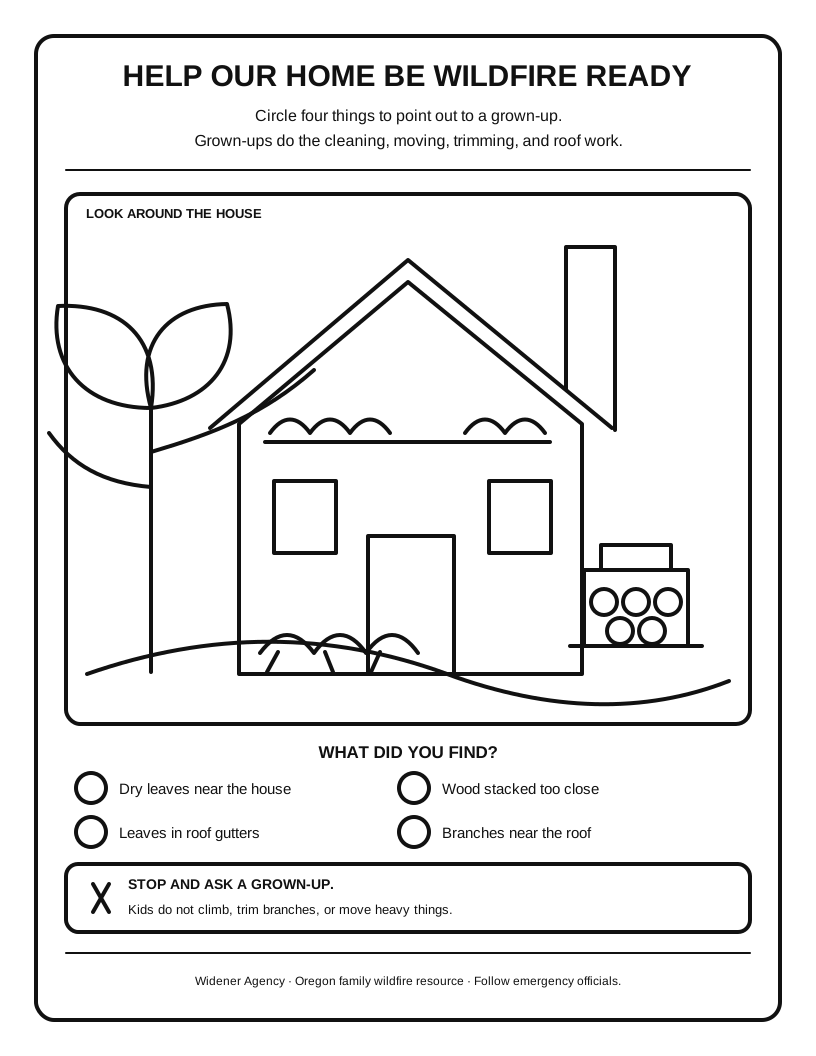
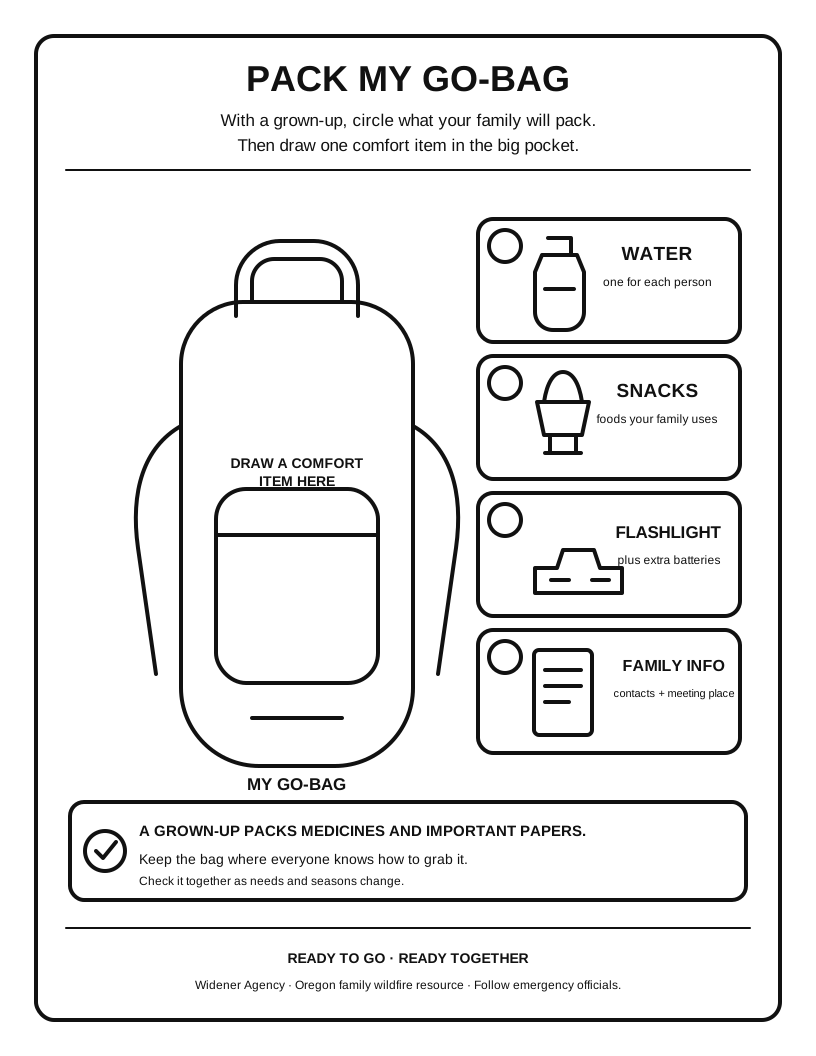
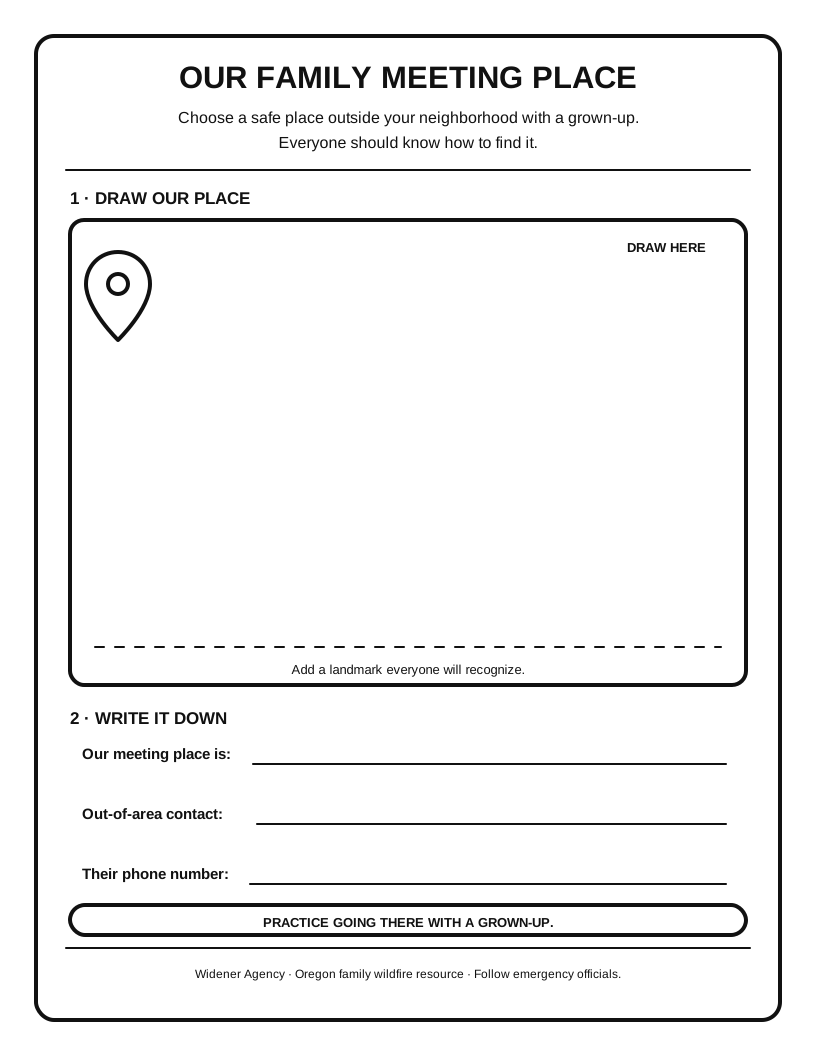
Use simple language: grown-ups have a plan, helpers will give instructions, and everyone has a small job. Let children pack comfort items, draw the meeting place, and spot simple home-safety tasks.

Pack My Go-Bag

Circle practical items and draw one comfort item.

Download SVG

Our Family Meeting Place

Draw the safe place your family chose together.

Download SVG

Help Our Home Be Ready

Color a home while finding leaves, wood, and other things to move.

Download SVG

Lane County · Eugene · Springfield

Keep local links with your family plan.

Lane County first responders use Lane Alerts for emergency information, including evacuation notices. The City of Eugene also points residents to Lane Alerts, the Emergency Alert System, and Wireless Emergency Alerts. LRAPA provides Lane County air monitoring and current AQI information.

Do not rely on one channel. Keep more than one way to receive alerts and official updates.

Frequently asked questions

Straight answers for fire season.

What do Oregon's Level 1, Level 2, and Level 3 evacuation notices mean?

Level 1 means Be Ready, Level 2 means Be Set to leave at a moment's notice, and Level 3 means Go Now. Oregon officials also say not to wait for another notice if you feel unsafe. People and animals that need more time should consider leaving earlier.

When should my family leave during a wildfire?

Leave immediately at Level 3. At Level 1 or 2, consider leaving earlier when children, older adults, disabilities, medical needs, limited transportation, pets, or livestock make evacuation slower. You may leave before Level 3 if conditions feel unsafe.

What belongs in an Oregon wildfire go-bag?

Pack water, portable food, medications, first aid, clothing, chargers, lights, a radio, identification and insurance copies, keys, cash, paper maps, hygiene items, glasses, child comfort items, and animal supplies. Keep a larger emergency supply separately for longer disruptions.

How do I protect my home from embers?

Start at the structure and first five feet: clear roofs and gutters, repair gaps, keep decks and under-deck areas free of debris, and move combustible mulch and stored items away. Then maintain vegetation and access through the 5–30 foot and 30–100+ foot zones.

What is defensible space?

Defensible space is the maintained area between a structure and surrounding vegetation or other fuels. Oregon State Fire Marshal guidance uses the home itself, 0–5 feet, 5–30 feet, and 30–100+ feet as practical work zones.

How do I make a cleaner-air room during wildfire smoke?

Choose a room that can be closed from the rest of the home, keep windows and doors closed when outdoor air is smoky, and use a correctly sized portable HEPA air cleaner or other filtration supported by current health guidance. Avoid creating extra indoor particles and monitor local AQI.

Can Oregon's state wildfire hazard map raise my homeowners insurance rate?

Oregon repealed the statewide wildfire hazard map in 2025. State law also prohibits an insurer from using any state-published wildfire hazard map to increase a homeowners premium, cancel a policy, or refuse renewal. Contact Oregon DFR if an insurer says otherwise.

Why can wildfire risk still affect insurance rates?

The map protection does not prohibit lawful underwriting. Insurers may consider location, vegetation, fire protection, construction, home age and replacement cost, claim history, and their own risk analysis. Companies also differ in the amount and type of risk they will accept.

What should I document before wildfire season?

Photograph or video every room, closet, garage, shed, and important outdoor item. Save model or serial information and receipts where practical, keep secure copies away from the property, and review policy limits, deductibles, and insurer contact information.

What should I do before returning home after a wildfire?

Wait for official clearance. Watch for structural, electrical, utility, tree, ash, and water hazards. Document damage from a safe location, contact the insurer, and follow Oregon DEQ and local guidance before disturbing ash or debris.
Official Oregon resources & sources

Go to the source when conditions or rules change.

This page summarizes current guidance in original language. It does not reproduce live incident data. Follow these agencies for current instructions and details.

Use this guide as a starting point.

Emergency orders, current public-health instructions, local codes, licensed professional advice, and your insurance policy take priority. Coverage, eligibility, rates, and discounts depend on the policy and insurer. Widener Agency does not guarantee that any mitigation project will change underwriting or price.

Sources reviewed August 9, 2026.
Start with five actions